

Wildfire smoke as we age: What to know and how to protect your health

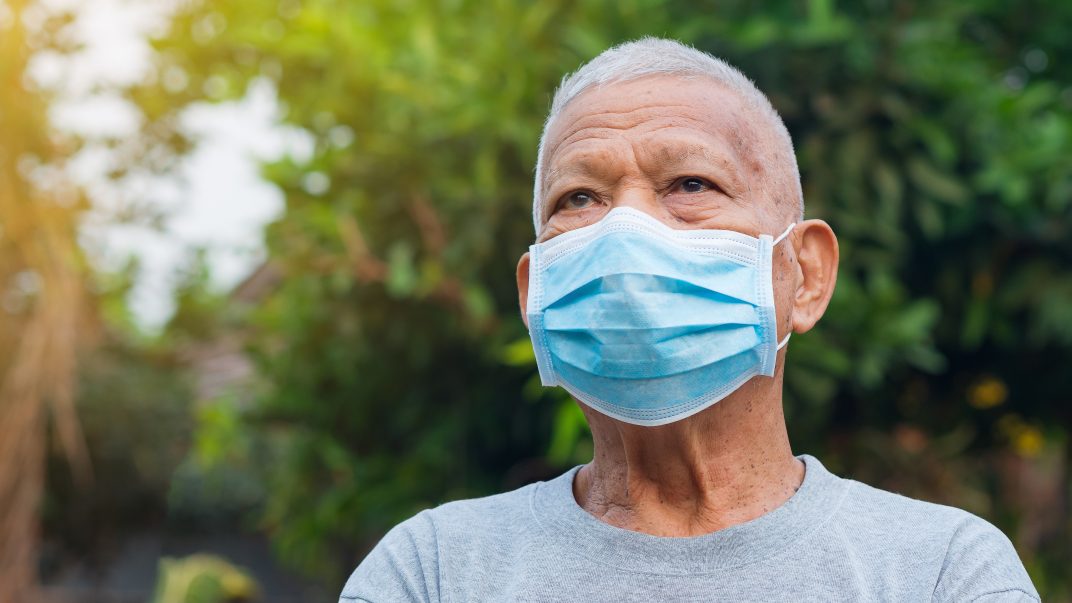
Wildfire smoke can travel hundreds or even thousands of kilometres, affecting our air even when a fire is far away. Although smoke can irritate anyone’s eyes, nose, throat, and lungs, adults aged 65 and older are more likely to experience serious health effects.1 In this short video, immunologist Dr. Dawn Bowdish explores an intriguing hypothesis about human evolution and why our immune system may be particularly sensitive to wildfire smoke.
What makes wildfire smoke harmful?
Wildfire smoke is a complex mixture of gases, particles, and water vapour. The greatest health concern is fine particulate matter, known as PM2.5. These particles are so small that they cannot usually be seen and may be present even when the air does not look or smell smoky.1
When inhaled, PM2.5 can travel deep into the lungs. Exposure can irritate the airways, trigger inflammation, worsen existing heart or lung conditions, and increase the likelihood of medical visits and hospitalizations.
Why are older adults at greater risk?
During periods of heavy smoke, everyone can be affected. Older adults are more likely to experience health effects from wildfire smoke. The risk can be greater for older adults living with chronic heart, lung, or other health conditions.1
The risk is particularly important for people living with:
- asthma or chronic obstructive pulmonary disease (COPD)
- heart disease, heart failure, or an irregular heartbeat
- diabetes
- other chronic health conditions
Impact on brain health
Air pollution, including wildfire smoke, is an emerging area of interest and a relatively new risk factor for cognitive decline and/or dementia.2,3 It’s possible that air pollution, especially PM2.5, has similar effects on the brain as cigarette smoking, contributing to effects on blood vessels and possibly other toxic effects on the brain as well.
How can you reduce your exposure?
The best way to protect your health is to breathe as little wildfire smoke as possible. Here are some actions you can take4:
- Check the Air Quality Health Index and local air-quality alerts, even if you cannot see or smell smoke.
- Reduce or reschedule outdoor activities when air quality is poor. Strenuous activity causes you to breathe more deeply and take in more smoke.
- Keep windows and doors closed when it is safe to do so.
- Use the best filter your heating or cooling system can safely accommodate, following the manufacturer’s instructions.
- Consider using a portable air cleaner with a filter designed to remove fine particles, properly sized for the room where you spend most of your time.
- Avoid creating additional indoor air pollution by smoking, burning candles or incense, or frying and grilling food.
- If your home becomes too hot with the windows closed, prioritize staying cool. Visit a community cooling centre or cleaner-air space if one is available.
If you must be outdoors, a well-fitting N95 or equivalent respirator can reduce the number of fine particles you inhale. It will not protect you from the gases in wildfire smoke. Some people with heart or lung conditions may have difficulty tolerating a respirator, so move to cleaner air and remove it if you experience trouble breathing.6
Keep an adequate supply of medications available and carry them with you during wildfire season. If you have a chronic health condition, work with your health care team to plan what to do if your medication does not control worsening symptoms.5
When should you seek help?
Contact a health care provider if you develop wheezing, a persistent or severe cough, shortness of breath, heart palpitations, dizziness, or other symptoms that concern you.1
Call 9-1-1 immediately for severe difficulty breathing, chest pain, or signs of a heart attack or stroke.
Make a wildfire smoke plan
Wildfire smoke conditions can change quickly. Preparing before smoke arrives can make it easier to reduce your exposure and respond if symptoms develop.
Prepare
- Check air quality.
- Keep medications available.
- Have filters and respirators ready.
Reduce exposure
- Limit outdoor activity.
- Keep indoor air cleaner.
- Stay cool during extreme heat.
- Wear an N95 if you must go outside.
Respond to symptoms
- Move to cleaner air.
- Contact a health care provider for concerning symptoms.
- Call 9-1-1 for severe breathing difficulty or chest pain.
The bottom line
Wildfire smoke can have short- and long-term health effects, but practical steps can reduce your exposure. Preparing ahead, paying attention to air-quality conditions, and responding early when symptoms arise can help you stay safer and feel more in control when smoke is in the air.
References
- Health Canada. Wildfire smoke, air quality and your health: health effects of wildfire smoke exposure. Updated July 17, 2026. Accessed August 13, 2026. https://www.canada.ca/en/services/health/healthy-living/environment/air-quality/wildfire-smoke/health-effects-exposure.html
- Livingston G, Huntley J, Liu KY, et al. Dementia prevention, intervention, and care: 2024 report of the Lancet Standing Commission. Lancet. 2024;404(10452):572-628. doi:10.1016/S0140-6736(24)01296-0
- World Health Organization. Risk Reduction of Cognitive Decline and Dementia: WHO Guidelines. 2nd ed. World Health Organization; 2026. Accessed August 25, 2026. https://www.who.int/publications/i/item/9789240123557
- Health Canada. Wildfire smoke, air quality and your health: protecting your physical and mental health. Updated July 20, 2026. Accessed August 13, 2026. https://www.canada.ca/en/services/health/healthy-living/environment/air-quality/wildfire-smoke/protecting-your-physical-mental-health.html
- Public Health Agency of Canada. Using a respirator mask during wildfire smoke events. Published May 2024. Updated July 8, 2024. Accessed August 13, 2026. https://www.canada.ca/en/public-health/services/publications/healthy-living/using-respirator-mask-during-wildfire-smoke-events.html
- Health Canada. Wildfire smoke, air quality and your health: preparing for wildfire smoke events. Updated July 17, 2026. Accessed August 13, 2026. https://www.canada.ca/en/services/health/healthy-living/environment/air-quality/wildfire-smoke/preparing-events.html
McMaster Optimal Aging Blog Posts are written by faculty, staff, PhD students, and external collaborators, and are assessed for accuracy by members of the Portal scientific leadership team.
DISCLAIMER: These summaries are provided for informational purposes only. They are not a substitute for advice from your own health care professional. The summaries may be reproduced for not-for-profit educational purposes only. Any other uses must be approved by the McMaster Optimal Aging Portal (info@mcmasteroptimalaging.org).