

Video games and aging: Are there real benefits?

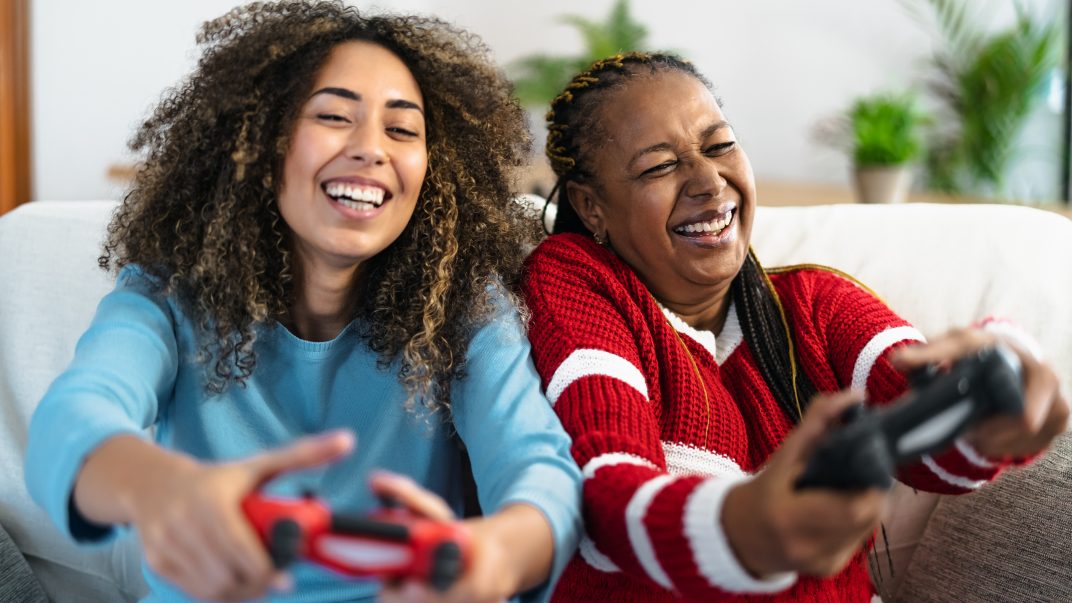
You might picture an “avid gamer” as a teenage boy shut in his room, immersed in a fast-paced action game for hours. It’s a familiar stereotype but one that is increasingly out of date.
Today, gaming looks very different. People of all ages are picking up controllers, virtual reality (VR) headsets, tablets, and phones to play. In fact, nearly half of adults aged 50 report playing at least once a month and more and more gamers identify as female (1). Public perception is changing too: in Canada, most people now see gaming as something that’s for everyone – not just for kids or teens (2).
Beyond entertainment, video games have also caught researchers’ attention for their potential cognitive benefits. In younger adults, certain types of games have been linked to improvements in skills like memory, processing speed, and flexible thinking (3). These are the kinds of abilities we use every day; whether we’re planning ahead, adapting to new situations, or making quick choices.
VR games take video gaming a step further than traditional games. Instead of just watching a screen, players interact with a computer-generated environment in real time. This might involve wearing a headset that places you inside a 3D world, or using motion-based systems like the Nintendo Wii or Xbox Kinect that let you control the game with your body. Because these games combine physical movement with quick thinking and decision-making, they may offer unique benefits for cognitive health as we age.
As gaming becomes more common across age groups, and technologies like VR add a new layer of immersion, a key question emerges: could these benefits extend into later life? To find out, researchers have begun exploring the effects of VR games on cognition in older adults. Let’s take a look at a recent systematic review comparing VR with conventional training or information-based treatment (4).
What the researchers found
Overall, the results are encouraging. Older adults who take part in VR-based training may show small but meaningful improvements in overall cognitive function, and executive function—the mental skills that help us plan, make decisions, and manage daily life.
One reason VR training might be helpful is that it’s fun. Unlike more traditional brain training programs, VR games are interactive and engaging – and that matters. When an activity is enjoyable, people are more likely to stick with it over time. Beyond that, consistency is key when it comes to supporting healthy aging. In fact, people stuck with the VR training more consistently than with conventional alternatives.
That said, it’s important to be realistic. VR games are not a cure-all, and benefits can vary by outcome, level of cognition, and the characteristics of the VR game or training program. For example, the benefits for overall cognitive function are modest yet seem to be strongest in people with normal cognition or early signs of memory decline. How much someone benefits may also depend on whether they get some guidance along the way. People who have a therapist or trainer supervising them appear to see significantly greater improvements in executive function compared to those left to play on their own. More research is needed to strengthen the evidence on the cognitive benefits of VR-based training in older adults (4).
So, what does this mean in practice?
VR games aren’t a magic solution for aging-related changes in the brain, but they may be a meaningful and enjoyable addition to a healthy lifestyle. And you don’t necessarily need a high-tech headset, many of the studies in this review used accessible systems and games like the Nintendo Wii’s Wii Fit, or Xbox Kinect’s Sport. Whether it’s a balance game, a cognitive challenge, or something more active, VR-style gaming may offer a way to stay mentally sharp and engaged.
Next time your grandchildren are playing a VR game, why not join in? You might just find that the fun is mutual and even get some cognitive benefits out of it!
Consideration: Remember though these are video games, in some instances you may still be exercising. Wear appropriate clothing and shoes, stretch and warm up your muscles, and remove any fall hazards or objects that may injure you from your surroundings. With the help of your healthcare team, you can take into consideration your health goals, the level of supervision needed, and necessary modifications.
References
- Kakulla B. Aging in play: Representations of age in video games. [Internet] 2025. [cited April 2026]. Available from: https://www.aarp.org/pri/topics/technology/internet-media-devices/gaming-age-representation/
- Entertainment Software Association of Canada. Forget stereotypes: The “Power of Play” report shows Canadian video gamers are more diverse and mobile than ever. [Internet] 2025. [cited April 2026]. Available from: https://theesa.ca/forget-stereotypes-the-power-of-play-report-shows-canadian-video-gamers-are-more-diverse-and-mobile-than-ever/
- Huang H, Cheng, C. The benefits of video games on brain cognitive function: A systematic review of functional magnetic resonance imaging studies. Appl Sci. 2022; 12(11):5561.
- Kantola M, Ilves O, Honkanen S, et al. The effects of virtual reality training on cognition in older adults : A systematic review, meta-Analysis, and meta- regression of randomized controlled trials. J Aging Phys Act. 2024; 32(3):321-349. doi: 10.1123/japa.2023-0217.
McMaster Optimal Aging Blog Posts are written by faculty, staff, PhD students, and external collaborators, and are assessed for accuracy by members of the Portal scientific leadership team.
DISCLAIMER: These summaries are provided for informational purposes only. They are not a substitute for advice from your own health care professional. The summaries may be reproduced for not-for-profit educational purposes only. Any other uses must be approved by the McMaster Optimal Aging Portal (info@mcmasteroptimalaging.org).