

Staying Safe and Socially Connected This Summer
Simple ways older adults and families can enjoy the season with comfort, confidence, and care
Summer can be a wonderful season for older adults living at home. Longer days, warm weather, time outside, and visits with family or neighbours can all bring a welcome sense of energy and connection.
But summer also asks for a little extra planning. Heat, dehydration, fatigue, and changes in routine can make the season more challenging, especially for older adults living with chronic conditions or changes in mobility.
Staying well in summer is not only about keeping cool. It is also about staying connected, active, and supported in ways that feel realistic and enjoyable.
With a few simple habits, older adults can make the most of the warmer months while protecting their health, independence, and quality of life.
Why summer deserves extra care
As we age, the body may not regulate temperature as easily. Some older adults may also feel thirst less quickly, while certain health conditions or medications can make hot weather harder to tolerate.
That means heat and humidity can take a toll faster than expected. Feeling unusually tired, dizzy, confused, or less interested in eating or going out may be signs that the body needs more rest, fluids, or cooling.
Summer safety is not about avoiding the season. It is about making small adjustments so the season feels enjoyable, not exhausting.
Build hydration into the day
Hydration is one of the simplest ways to support energy and comfort during warm weather.
Many older adults do not feel thirsty as quickly, so it helps to build fluids into the day rather than waiting for thirst. Keep water nearby, drink fluids with meals and snacks, and have something to drink before going outside or doing any activity.
Hydrating foods can help too. Fruit, yogurt, smoothies, soups, and salads can all support fluid intake while keeping meals light and enjoyable.
For family members, a gentle reminder can go a long way. A question like, “Have you had enough to drink today?” can be simple, respectful, and helpful.
Know the signs of heat exhaustion
Heat-related illness can develop quickly during hot or humid stretches. Knowing what to watch for helps families respond early.
Signs may include dizziness, headache, nausea, heavy sweating, unusual fatigue, dark urine, confusion, irritability, or fainting.
If something feels wrong, move to a cooler place, encourage fluids if it is safe to do so, and seek medical help if symptoms are severe, worsening, or involve confusion or fainting.
For caregivers and adult children, small changes can matter. If a loved one seems less steady, more withdrawn, unusually tired, or not quite themselves during hot weather, it may be time to adjust the day’s routine or add extra support.
Keep the home cool and manageable
A comfortable home is an important part of summer wellness.
During the hottest part of the day, close blinds or curtains to block direct sunlight. Use fans to circulate air, and open windows when the outdoor air is cooler than inside, usually earlier in the morning or later in the evening.
Try to plan heat-producing tasks, like cooking, laundry, or heavier cleaning, for cooler parts of the day. Lightweight clothing, cool cloths, shaded rooms, and regular rest breaks can also make the day feel easier.
The goal is to create a home environment that supports comfort, energy, and independence throughout the season.
Stay active, but pace the day
Summer offers many simple ways to stay active and engaged. A short walk, light gardening, a visit on the porch, or time spent outside with a neighbour can support mobility, mood, and routine.
The key is timing and pacing.
Outdoor activities are best earlier in the morning or later in the day, when temperatures are cooler. Choose shaded areas, bring water, and take breaks before fatigue sets in.
Staying active does not need to be ambitious. A few minutes outside, a slow walk, or a small household task can still support well-being. Summer activity should feel refreshing, not draining.
Make space for connection
Social connection is an important part of healthy aging. In Canada, loneliness and isolation are common among older adults, and barriers to social participation can make those feelings worse.
Summer can be a meaningful time to rebuild small moments of connection.
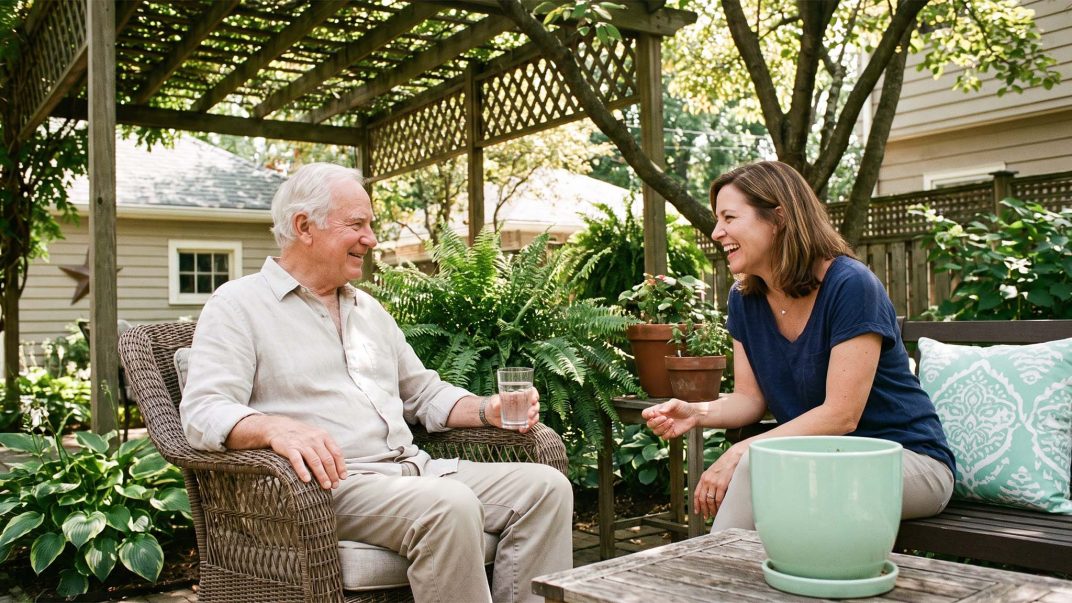
That might look like coffee on the patio, a short visit with a neighbour, a phone call with family, a community activity, or sitting outside together in the shade. These moments may seem simple, but they can help older adults feel seen, engaged, and part of daily life.
Connection does not have to mean a full calendar. Often, the most meaningful routines are small and predictable.
Adjust routines for the season
Hot weather often calls for a different rhythm.
That might mean earlier errands, lighter meals, more rest in the afternoon, shorter outdoor activities, and extra water throughout the day. It may also mean doing household tasks in smaller steps or asking for help when something feels too tiring.
These are not signs of losing independence. They are practical seasonal adjustments that help older adults keep enjoying the things that matter most.
A summer routine might include a morning walk, a cool indoor rest period, regular hydration reminders, and a simple social moment later in the day when the heat begins to ease.
How families can help without taking over
Adult children and caregivers often notice subtle changes first. A loved one may seem more tired than usual, less steady, less hungry, or less interested in activities they usually enjoy.
Support can be helpful without feeling intrusive.
Try gentle questions like:
“Would it help if we planned visits earlier in the day?”
“Can I call you after lunch during the hot weather?”
“Would you like company for a short walk before it gets too warm?”
“Is there anything around the house that feels harder to manage right now?”
The goal is not to take over. It is to help make summer safer, more comfortable, and more connected.
When a little support makes summer easier
Sometimes the best way to protect independence is to make the day-to-day load lighter.
Support with home care, companionship, light household help, or seasonal maintenance can help older adults conserve energy during hot weather. It can also give families peace of mind knowing their loved one has support with routines, comfort, and connection.
A companion visit, a little help around the home, or regular support with daily routines can make it easier to enjoy summer without overdoing it.
A summer that feels safe and full
Summer should feel enjoyable, not overwhelming.
With simple planning, steady routines, and the right support when needed, older adults can stay cool, active, and socially connected while continuing to live well at home.
A glass of water nearby. A shaded place to rest. A morning walk. A call from someone who cares. A quiet visit on the porch.
These small choices can help make summer feel lighter, safer, and full of possibility.