

3 potential health benefits of playing video games

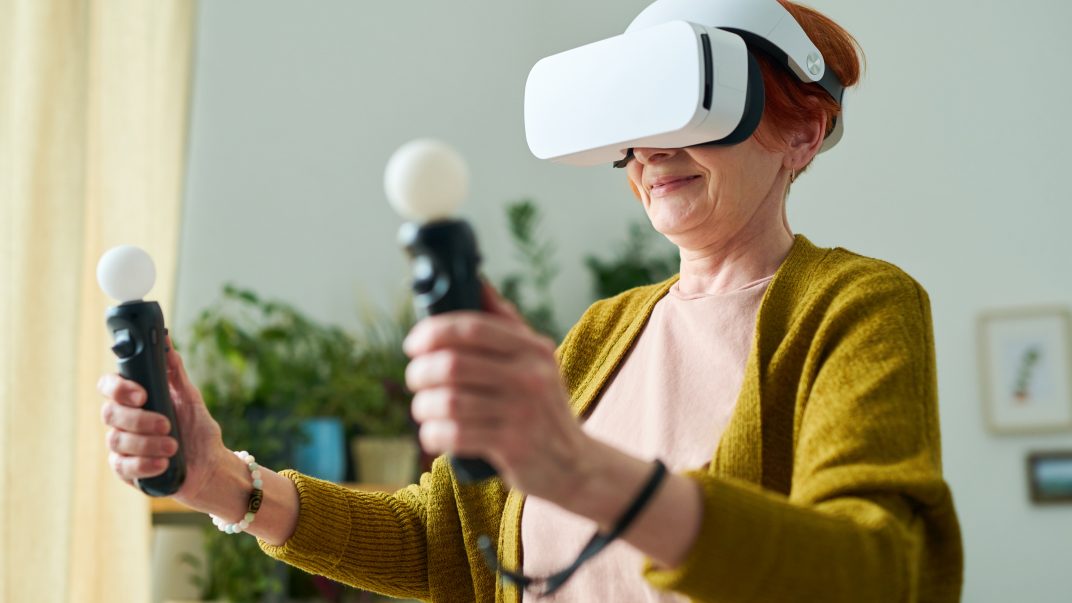
In 2025, the global video game industry generated nearly $190 billion in revenue (1). That same year, 3.6 billion people across the world actively played video games, averaging about seven hours of playing time per week (1;2). By 2028, this player base is projected to grow to almost 3.9 billion (1). With so many people choosing to spend time gaming, it’s easy to see why playing video games has become an area of interest for researchers. Some of this research has focused on whether playing video games can benefit aspects of our physical and cognitive health (3-5).
1. Improvements in physical function
Exergames are a type of video game that combines exercise, such as dancing, and gaming. More specifically, people are prompted to be physically active, while technologies like motion sensors track their movements and feedback on performance is provided (3;6;7). Research shows that dance exergames may improve multiple areas of physical function in older adults. These include improvements in staying balanced while moving around or changing positions, processing visual cues and physically responding to them, the time it takes to perform a movement that’s been initiated, and the time it takes to complete a mobility and balance-related task or test (3).
2. Improvements in cognitive function
Virtual reality video games are a type of game that uses technology to immerse players in a virtual environment or world. Core features include interactivity and providing sensory feedback (4;8). Research shows that virtual reality video games may improve overall cognitive function
and the mental skills that support planning, decision making, and organizing daily life in older adults. These improvements are small but meaningful (4).
3. Improvements for people who’ve had a stroke
Virtual reality video games also appear to benefit people who’ve experienced a stroke. Research shows that virtual reality therapy may improve overall arm function, the level of motor impairment experienced, and the ability to perform daily self-care activities by a small amount, especially in people with moderate to severe arm weakness. What’s more, games that are immersive, meaning they allow players to feel like they are physically present in the game’s virtual environment vs. just viewing it on a screen, may be best (5).
As the player base grows, so does interest in the potential benefits that gaming can offer. Future research will help to expand the evidence base and provide a clearer understanding of the limitations and benefits of playing video games.
Tips:
- Game safely: If you’re playing video games that have you exercising or moving around, remember to wear clothes and shoes that allow you to move comfortably, briefly warm up before starting, remove fall and trip hazards from your surrounding environment, and consider whether supervision is needed. If you have underlying health conditions that may impact your ability to participate safely, talk to your healthcare team before getting started. Together, you can consider your health status, goals, and any needed modifications.
- Start gradually: If you’re new to more physically active video games, it’s good to start small or slow with lower-intensity games or shorter gaming sessions and work your way up as you become more comfortable.
- Be consistent: When we enjoy an activity, we are more likely to stick with it. Choose video games and gaming formats that interest you.
References
- Newzoo. Newzoo’s Global Games Market Report 2025. [Internet] 2025. [cited August 2026]. Available from: https://newzoo.com/reports/global-games-market-report
- Statista Research Department. Weekly time spent playing video games worldwide 2025, by country. [Internet] 2025. [cited August 2026]. Available from: https://www.statista.com/statistics/1263080/daily-time-console-games-country/?srsltid=AfmBOoo_iPjC66y6VWzXFLzCe-MQrLMTBICo9w9M-RCFOrTBuDk2MKE5
- Yoong SQ, Wu VX, Chen C, et al. Dance exergames for older adults: A systematic review and meta-analysis with narrative synthesis. 2024; J Gerontol A Biol Sci Med Sci. 79(4): glae035. Doi: 10.1093/Gerona/glae035.
- Kantola M, Ilves O, Honkanen S, et al. The effects of virtual reality training on cognition in older adults: A systematic review, meta-Analysis, and meta- regression of randomized controlled trials. J Aging Phys Act. 2024; 32(3):321-349. doi: 10.1123/japa.2023-0217.
- Jin M, Pei J, Bai Z, et al. Effects of virtual reality in improving upper extremity function after stroke: A systematic review and meta-analysis of randomized controlled trials. Clin Rehabil. 2022; 36(5):573-596. doi: 10.1177/02692155211066534.
- Cacciata M, Stromberg A, Lee JA, et al. Effect of exergaming on health-related quality of life in older adults: A systematic review. Int J Nurs Stud. 2019; 93:30-40.
- Chan KGF, Jiang Y, Choo WT, et al. Effects of exergaming on functional outcomes in people with chronic stroke: A systematic review and meta-analysis. J Adv Nurs. 2022;78(4):929-946.
- Sherman WR, Craig AB. Understanding virtual reality: Interface, application, and design. San Francisco, CA: Morgan Kaufmann, 2018.
McMaster Optimal Aging Blog Posts are written by faculty, staff, PhD students, and external collaborators, and are assessed for accuracy by members of the Portal scientific leadership team.
DISCLAIMER: These summaries are provided for informational purposes only. They are not a substitute for advice from your own health care professional. The summaries may be reproduced for not-for-profit educational purposes only. Any other uses must be approved by the McMaster Optimal Aging Portal (info@mcmasteroptimalaging.org).