

Cholesterol: Exercising to increase the “good” and counteract the “bad”
- Cholesterol is a fat-like substance with a soft, waxy texture.
- Excess low-density lipoprotein (LDL) cholesterol can increase the risk of a heart attack.
- High-density lipoprotein (HDL) cholesterol holds protective properties by helping pickup and transport LDL cholesterol to the liver for eventual removal from the body.
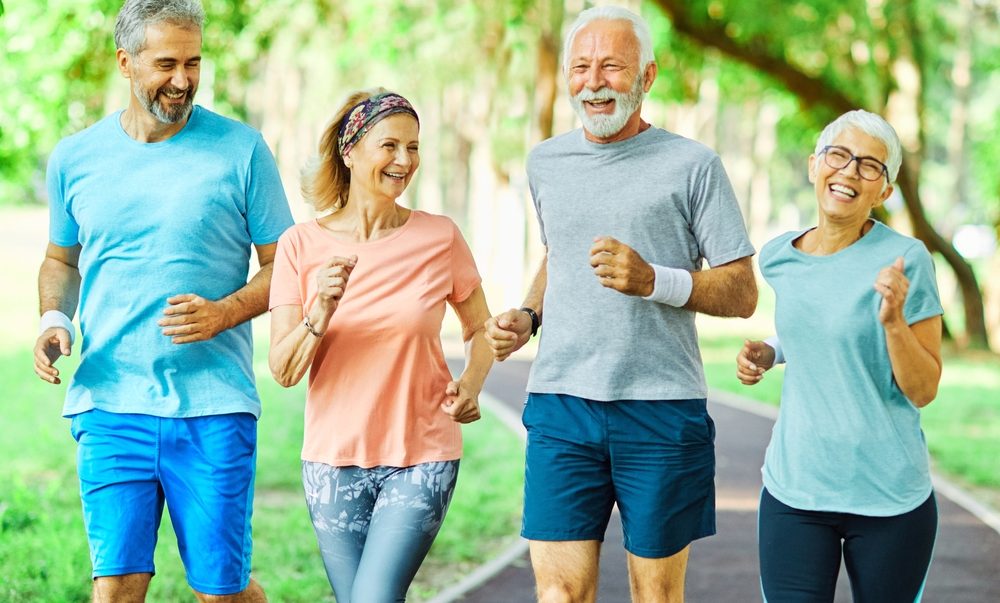
- In middle-aged and older adults, aerobic exercise can increase levels of HDL cholesterol, compared to no exercise.
- Consult your healthcare team about if and how to incorporate aerobic exercise into your exercise routine.
Exercise, an eight-letter word that represents a seemingly endless number of activities. Taking a walk, dancing, training with weights or resistance bands, Pilates classes, and doing tai chi are just a few of the ways people get their physical activity “in” throughout the week. Exercises tend to fit into one or more of the four major types: aerobic/endurance, resistance/strength, flexibility/stretching, and balance (1;2).
Aerobic exercises, like a brisk walk or dancing, get our heart rate up and make us breathe harder in a bid to strengthen our heart, lungs, and circulation. Resistance exercises, like lifting weights or using resistance bands, help build our muscle strength. Flexibility exercises, like Pilates, get us to stretch our muscles and enhance joint movement. Lastly, balance exercises, like tai chi, try to make us steadier so we stay on our feet (1;2).
Cholesterol is a fat-like substance with a soft, waxy texture. The two main types are low-density lipoprotein (LDL) cholesterol (aka “bad” cholesterol) and high-density lipoprotein (HDL) cholesterol (aka “good” cholesterol). High levels of “bad” cholesterol can increase the risk of having a heart attack by contributing to the buildup of plaque in our arteries. To counteract this, “good” cholesterol helps collect excess “bad” cholesterol and carries it to the liver to be broken down and eventually eliminated from the body.
Given its important role, are there things we can do to increase our levels of “good” cholesterol? Well, exercise has been a critical part of plans to prevent and treat heart disease.
What the research tells us
Let’s get moving! The review, which looks at aerobic, resistance, and stretching exercises alone or in combination, found that exercise likely increases HDL “good” cholesterol in middle-aged and older adults, compared with no exercise. While this is a great start, it’s also important to identify which types of exercise are, in fact, effective. Once we zoom in on the findings, we see that aerobic exercise is likely effective for improving HDL “good” cholesterol, while resistance and stretching exercise likely aren’t. It should be said that despite resistance and stretching exercises not appearing effective for this one outcome, they contribute to our health in other ways and should still be included in our overall exercise routine. The studies included in the review are good enough that we can be moderately sure about these findings (2).
Though the review doesn’t specify what duration, frequency, and intensity of aerobic exercise is best for increasing HDL cholesterol, the Canadian 24-Hour Movement Guidelines provide a general recommendation for improving our overall health and well-being. These guidelines state that adults aged 18 and older should engage in at least 150 minutes of moderate to vigorous aerobic physical activity every week (3). Do you incorporate aerobic exercise into your weekly exercise routine? If yes, keep it up! If you don’t yet, speak with your healthcare team about whether this type of exercise is appropriate for you and how you can safely use it to better your health.
References
- Morey MC. Physical activity and exercise in older adults. 2025. In UpToDate. Wolters Kluwer.
- Liang, L, Peng, F, Wang, L, et al. Effects of exercise on high-density lipoprotein levels in middle-aged and older individuals: A systematic review and meta-analysis. Medicine. 2025; 104:e41493. doi: 10.1097/MD.0000000000041493.
- Canadian Society for Exercise Physiology. Canadian 24-Hour Movement Guidelines: An integration of physical activity, sedentary behaviour, and sleep. [Internet] 2026. [cited February 2026]. Available from: https://csepguidelines.ca/
McMaster Optimal Aging Blog Posts are written by faculty, staff, PhD students, and external collaborators, and are assessed for accuracy by members of the Portal scientific leadership team.
DISCLAIMER: These summaries are provided for informational purposes only. They are not a substitute for advice from your own health care professional. The summaries may be reproduced for not-for-profit educational purposes only. Any other uses must be approved by the McMaster Optimal Aging Portal (info@mcmasteroptimalaging.org)